
Why Reviews Matter and What You Should Do About Them Now!
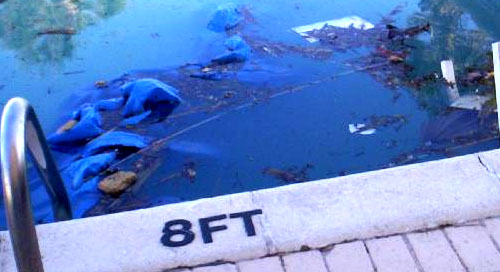
Wow, the pool did not look like that on TripAdvisor...
According to a new study from Bazaarvoice and richrelevance, conducted by JupiterResearch based on a survey of over 800 consumers nationwide, 48% of all online shoppers plan to spend less this year, but 61% of those reluctant to make certain purchases can be positively influenced by online shopping resources. The study shows that consumers are finding significant value in online content tools that connect them to the opinions and behaviors of other shoppers.
These tools are particularly relevant to shoppers who are cutting back, as those affected by economic conditions seek more validation for their purchase decisions.
Online shoppers, says the report, will be more reluctant to make purchases in the next 12 months primarily in:
- The automotive sector
- Travel
- Consumer electronics
Consumers looking to reduce their spend are shopping around; 42% visited 3 or more sites to research their last purchase, and nearly all consumers are spending more time online prior to purchase.>>Full Story
Thoughts//You read that right, consumers shopping for travel are going to be more reluctant to purchase online over the next 12 months. A closer look at the statistics:
Planned Spending Reductions in Next 12 Months by Online Shoppers
% Planning Reduction in SpendingTravel = 46%
The only category scoring higher was Autos at 50%. Which, is sort of a double hit for travel...less cars mean less road trips, but we will save that for another post.
But let us not look at this problem as the proverbial glass of half full travel water. Instead, what can we do from the DMO, CVB, airline, etc., perspective to take advantage of this greater reliance on travel reviews?
Let's look at some findings from the second half of the survey:
Shoppers who research their purchases online look to content sources that help inspire, discover, and confirm their choices, including:
- User ratings and reviews
- Recommendations based on other consumers' purchasing behaviors
- Recommendations based on others' browsing behavior
So consumers are less willing to spend freely, but are conducting more research and looking for more recommendations prior to purchasing. They are looking for confirmation of a good deal.
Here is our opportunity...taking those 3 points and ensuring that our interactive marketing strategy is addressing those items.
We will look at the solution from two angles, first, off site or 3rd party reviews and then, on site reviews.
Off Site / 3rd Party Influences:
In the travel industry TripAdvisor is the influencing factor for travelers. Sure, there are other review sites out there, but for the purposes of this post, we will simply focus on TripAdvisor and then assume you can apply these same techniques to the other sites within the sector.
First, we will tackle the most obvious and popular feature on TripAdvisor, individual property reviews. Whether you are a hotel, restaurant, tour company or CVB, you have the ability to own and edit your page on TripAdvisor. Search for your property, locate it, scroll to the bottom of the page and find the 'Visit Your Owner's Page.'
Start there and ensure your property information is correct, reply to comments, both positive and negative. If travelers are making decisions based upon the reviews on your page, you / your organization should have a presence within these pages to influence those decisions.
While your owner's page will be the most important point of influence on a site such as TripAdvisor, do not overlook the other opportunities to contribute content and influence to travelers:
- Post Photos
- Post Videos
- Monitoring, and perhaps participating on the Forums
- Adding Before You Go content
- Add your Listing Information
- Contribute unbiased Traveler Lists
There you go, more than enough work to keep you or your intern busy for the next few weeks.
In all seriousness, a lot of work, but considering the stats from the survey, important work to make sure your hotel or destination is included in the consumers travel planning process.
Plus, here is a little secret...consumers don't just go to your site to plan their vacation, they go to several, even beyond TripAdvisor.
On Site Influences:
Okay, we have covered the basic steps for the 3rd party sites, but what about your website. How can you adjust your current site to include the relevant review and recommendation content that the consumers want:
- User ratings and reviews
- Recommendations based on other consumers' purchasing behaviors
- Recommendations based on others' browsing behavior
First, we will look at the first item 'User ratings and reviews' from two perspectives...member based organizations and non member organizations.
If you work for or represent a member organization, like a CVB or DMO, you have already cringed at the mere mention of the word 'review.' Members, for the most part, do not want them on a site where they are paying for placement. True, some organizations are finally understanding the importance of being transparent to the consumer (see this study as an example of why), but for most, they are just not ready. So, for member based organizations, it is really a matter of time and acceptance from the members before reviews will be featured on your site.
For those of us who are not member based, what is the hold up? Why do you not have reviews on your site? Sure they, might drive some traffic away from your site, but if you refer to our quote above, travelers are visiting more than just your site anyway. If you make the transition easy and painless for them to get to TripAdvisor, they might use your site as their travel planning hub, rather than one of the large OTAs.
I refer back to an example from my previous work at the Arizona Office of Tourism, including TripAdvisor reviews on the individual hotel pages...in this case, the JW Marriot. Granted, not the most aesthetically pleasing execution, but using the TripAdvisor module was easy to implement.
However, the major benefit comes from the scale and volume of TripAdvisor, or for that matter, any big OTA or review site. Smaller CVB and DMO sites simply do not have the volume to support in house or on site consumer reviews. Sure, you could add them, but there would be only a handful of reviews for a property. Not enough for the consumer...plus, they were planning on going to TripAdvisor anyway.
Okay, on to the last two points:
- Recommendations based on other consumers' purchasing behaviors
- Recommendations based on others' browsing behavior
From my perspective, these are much easier to implement than they appear.
Two quick examples:
1.Recommendations based on other consumers' purchasing behaviors
If you are a hotel, why not add a little line to the top of a room detail page that says:
'14 travelers have booked the Junior Suite in the last XX days.'
Adjust the ratio to fit your property volume and you are all set. Verification to the consumer that other people have booked the same room. Or, a recommendation based on other consumers' purchasing behaviors.
2.Recommendations based on others' browsing behavior
Another easy one. For this example, you are a CVB that has an itinerary builder or 'suitcase' feature on your site. Track the number of times a consumer adds an attraction to their itinerary. Then, on that attraction detail page add a quick line, or better yet, Digg style icon that says:
'98 travelers have also added this attraction to their itinerary.'
Not only are you re enforcing the fact that others have selected the same attraction, but for those consumers who have not started an itinerary, it is a quick promotion for that feature.
Just like that we have found 3 great ways to incorporate useful information that travelers are looking for into your own site.
Use these examples to start a discussion with your own staff on how you can take advantage of consumer behaviors and travel trends. Don't get caught up in the negativity of the current market, use this opportunity to your advantage to reach out and convert more planners into travelers.
More from the Travel 2.0 Blog
Teaching Social to DMO / CVB Members
Another week, another road show for Travel 2.0. ...Travel Trends , NYCGo, Manchester + Surface, World Expo Tour
NYCGo or the Google Visitor Center Hat tip t...The Visitor Center of the Future: The Apple Store
On a recent trip to the mall...my daughter pre...
blog comments powered by Disqus
Great article but no need for an intern if you subscribe to an automated solution like the Avalon Buzz Report. It is very satisfying to see the industry catching up to what we pioneered in 2005! The folks at the Avalon Buzz Report have been educating the need to track the online GSS trends for years.
Hoteliers who may think online reviews and ratings are not important enough to track in a frequent and organized format, must not be working in the year 2009. Not only does a hotel need to track their "word of mouse", they need to listen and react to all the guest comments. For more info, visit:http://www.avalonreport.com/req_sample.php
(Editor's Note: Clearly a sales pitch, but it might be relevant to some users, so we included it. Troy)
You must have read our business plan. This is why it is important to pull the social content such as GoSeeOregon/GoSeePortland, Yelp, Trip Advisor within your web site so consumers can get instant social "feedback" just as if they were shopping for a new computer at Best Buy or a book at Amazon.
Is RCCL Manipulating CruiseCritic.com (owned by TripAdvisor)?
From Jaunted (Conde Nast):
http://www.jaunted.com/...es+Has+Web+2.0+Viral+Infection
Royal Caribbean Cruises Has Web 2.0 Viral Infection
No surprise here: Royal Caribbean Cruise Line has a viral infection. For once, however, it's not the Norovirus but that new fangled byproduct of Web 2.0, the viral marketing infiltration. According to Consumerist, a group of fifty "Royal Champions" was outed by their own creator, the Customer Insight Group, as being a successful project whereby frequent positive cruise commenting on sites such as CruiseCritic was rewarded with free cruises and other perks.
So what's the big deal? Well, it seems that the "Royal Champions" weren't always up front about their status as compensated reviewers, effectively misleading readers of CruiseCritic forums with their positive comments. Add to this the fact that CruiseCritic admins assisted Royal Caribbean in choosing the fifty, with one of the stipulations being quantity of posts, "with many having over 10,000 message board posts on various Royal Caribbean topics." From here, the hole just gets deeper.
Now that many RC fans feel slighted at not having made the ranks and most everyone else is disgusted at the covert trade of cruising for happy juicing, the trustworthiness of such forums is under fire.
Due to CruiseCritic's ownership by TripAdvisor, which is in turn under the Expedia blanket of travel sites, a viral marketing stunt gone awry could possibly continue to negatively ripple. Does news like this affect your ability to trust good reviews on travel sites, or do you already consider yourself an excellent shill spotter enough to weed out the solicited from the unsolicited? While this whole ordeal is mired in serious muckety muck, let's hope it serves as a lesson for future viral marketers and as an argument for transparency.