
Travel Trends , Magazines v. TV v. Web, 300 250 Wins, Email Tracking
For Better or For Worse; Magazines vs. TV vs. The WebA common question in meetings and board rooms across the land...which is better, TV, print (magazines) or web? The short answer is that it depends. The long answer was tested by a McPheters & Company survey.
From the article:
To find the relative effectiveness of ads on television, in magazines, and on the Internet, McPheters & Company used 30 second TV ads, full page 4 color magazine ads, and Internet banner ads in standard sizes, and employed eye tracking software to determine if (and how) Internet ads were actually seen by respondents.
Respondents, in 30 minutes with a single medium in a laboratory setting, either watched a choice of sit coms, read a magazine they selected, or surfed the Internet at will.
At the end of the period they filled out similar surveys that, among other things, asked whether they recalled seeing 4 ads which appeared in the medium they consumed. To establish "over claiming" they were also asked whether they recalled seeing 4 ads that had not appeared. The adjusted "net" recall resulted in these major findings:
- Within a half hour, magazines effectively delivered more than twice the number of ad impressions as TV and more than 6 times those delivered online
- Though TV doesn't deliver as many ads per half hour as do magazines, net recall of TV ads was almost twice that of magazine ads
- Magazines had ad recall almost three times that of Internet banner ads
- 85% of Internet ads served appeared on screen and could be identified by brand
- Among web users, 63% of banner ads were not seen. Respondents' eyes passed over 37% of the Internet ads and stopped on slightly less than a third
- For Internet ads, almost all net recall could be attributed to ads that were seen
- Internet video ads appeared much less frequently than banner ads, and their exposure skewed heavily towards young men. When they did appear they were twice as likely to be seen as banner ads.
Study results, in combination with information on probability of exposure, found that:
- A full page, 4 color magazine ad, was determined to have 83% of the value of a 30 second television commercial
- A typical Internet banner ad had 16% of the value of a 30 second television commercial
Rebecca McPheters, CEO of McPheters & Company, noted... (though) sample sizes were not significantly robust to release results for individual ad categories... there are real differences in performance that are worthy of further exploration...."
Of course, do these results really surprise anyone? If you ranked those mediums in terms of 'ad avoidance' or how easy is it for me to ignore the ads, the standings would be: web, magazines and TV. Resulting in an exact reverse in terms of ad exposure.
http://www.mcpheters.com/
Finding Yields New Angle On RectangleAnother good, but probably not surprising stats article, this one about the effectiveness of display ad sizes.
From the article:
In a finding that might seem to refute some conventional wisdom about the effectiveness of online advertising formats, the lowly rectangle has been found to be far more engaging than other premium ad formats, including to of the page leaderboards, and page scraping skyscrapers. The finding, which is the result of an extensive "time spent" analysis of nearly 150 million ads served during 2009 by social media ad optimization firm Lotame, found that 300 x 250 "medium rectangle" ads averaged 13 seconds of "viewing" exposure per user served vs. only 5.4 seconds for leaderboards and 1.9 seconds for skyscrapers.
...that the relative value of rectangles makes sense given their positioning on most Web pages, falling in the middle, where a lot of user time tends to gravitate.
"When you load a skyscraper, it probably doesn't load fully before a user scrolls down the page. And when users scroll down a page, leaderboards get partly obscured...
http://www.mediapost.com/
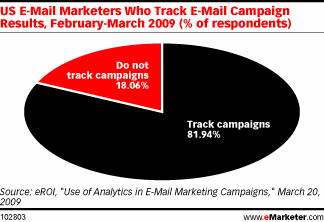
E Mail Marketers Sending in the DarkThe proposition for e mail marketing in the Web 2.0 world is simple, a low cost medium with a good return on investment that can be easily tracked. But for many e mail marketers, tracking is proving tricky. According to eROI, 18% of US e mail marketers are not tracking the effectiveness of their campaigns.
More from the Travel 2.0 Blog
Travel Trends , Mobile Travel Stats, Flipboard
Mobile Travel Stats Our friends at Destinati...This Week in Travel Tech
Another Friday is upon us and you have some ti...Travel Trends Just The Facts, Examiner.com
Just the facts A great post from our often quote...
blog comments powered by Disqus
Fascinating! I have to concur about the 300 x 250 ad units; it generates the best CTR and engagement from our campaigns.
I agree with Mo that this is really interesting stuff, and also add that one of our media reps is always pushing me into their 300x250 unit and we have seen very strong results from that placement.
Other item that jumped out to me is the email tracking stat, why the heck send out email campaigns if you aren't tracking them in some way???
Why Travel 2.0 Travel Trends Magazines v. TV v. Web, 300 250 Wins, Email Tracking