
Say "No" to Blogger Payola!
FTC is Coming Down on Blogger/Tweeter PayolaFromQueenslandtoOregonandScottsdaletoDisney, destinations of all types and sizes are using bloggers (as they should) in their marketing outreach strategy. In an effort to ensure that bloggers are transparent and authentic about their intentions, the FTC recently voted to update its endorsementguidelines(pdf) and put an end to "bloggerpayola". These rule revisions require bloggers to "clearly disclose any 'material connection' to an advertiser, including payments for an endorsement or free product." While these guidelines are non binding and have raisedinteresting legal questions, we applaud these FTC rule changes, the first in nearly 30 years, because it is an undeniable recognition of the legitimacy of social media and a genuine effort to crackdown on unscrupulous advertisers who're bringing us all disrepute anyway. Face it, bloggers you hire should be already be disclosing their relationships to products and places they write about. The prospect of an $11,000 fee might just be the incentive to end this wild west mentality.>>Full Story
Where Are the Clickers?!We can't help but beobsessed with analyticsand measuring online engagement. ComScore recently updated the aforementioned "Natural Born Clickers" study and we're not surprised by the results. According to the new study, the "number of people online who click display ads has dropped 50% in less than two years, and only8% of internet users account for 85% of all clicks."
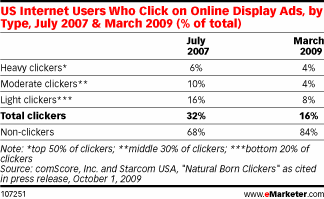
The silver lining however is that clicks are just one measure of success; this study also finds that consumers who're exposed to display ads have consistently proven to conduct more searches than those who've not and that display ads are stronger when paired up with search. This reaffirms thesilent clickers studywe reported on a few weeks ago.>>Full Story
On the Internets, Critics Are NiceIf you're still feeling apprehensive about allowing consumers to rate your hotels and review your attractions, rest easy. According tothis recentWall Street Journalarticle, "when consumers write online reviews, they tend to leave positive ratings; the average grade for things online is about 4.3 stars out of five". This positivity is pervasive in the travel industry as well; TripAdvisor's average review is a "4" and well over 90% of the reviews onGoSeeOregon.comare positive. But are consumers going to run from reviews and ratings if they become nothing but a sea of positivity? Probably not, but they'll most likely start to become skeptical of these "reviews" in general. A broader and balanced range of opinions gives consumers a more complete view of a business and many sites are taking steps to counter this. Consider:
- Trip Advisor posted warnings that some of its hotel reviews may have been written by hotel managers
- e Bay raised minimum standards; 4.3 out of 5 stars is not the new "minimum service standard"
- Amazon highlights "the most helpful critical review" at the top of its reviews page
- The GoSee review sites uses a peer credibility rating (trustiness) to rate the reviewers