
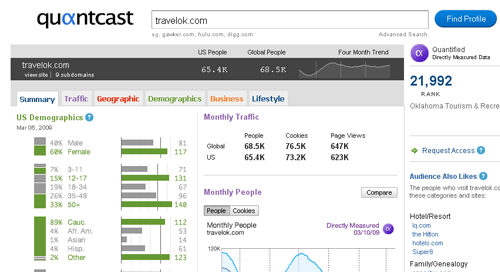
Is Quantcast the answer?
Today, a guest post on the Travel 2.0 blog from our colleagueChris Adams at Miles Media. As many of you read yesterday, Chris was involved with the white paper / post 'Monitor, Measure and Manage , Best Practices in Web Analytics for DMOs' and has advanced that work into a larger recommendation for standardization.
In days when DMOs are seeking to validate the public dollars invested in their budgets and champion the importance of tourism to their local and state economies, reporting has become more critical than ever. Because the Web is one of the dominant marketing and communication channels for most destinations, tracking Web sites' online activity and audiences is a critical part of ROI reporting. However, this reporting can be complex, difficult to validate, benchmark or communicate to stakeholders, because of the lack of consistency and validation in the market. The range of web analytics tools, different technologies that collect these metrics and a bewildering range of terms (e.g., "visits," "unique visits," "visitors," "user sessions") undermine the credibility of our numbers and make "apples to apples" comparisons across the travel industry nearly impossible.
Industries such as TV, film, radio, movies, airlines, groceries and more benefit from a standardized approach to reporting. So could DMOs. We propose adopting a standard for DMOs to track and report on their online audience which will offer a simple, independent and accurate number (XXX "people" viewed your Web site). Options exist that are low in cost, or free, and are very simple to implement. They would enhance and not replace a DMO's existing web analytics reporting (whether Google Analytics, Omniture, WebTrends etc). Information is power, and a standardized way to track audience measurement will benefit the entire DMO industry.
Please download the attached White Paper on a standardized audience measurement solution for DMOs. This details the options, recommends one possible solution and suggests next steps. We welcome your feedback, comment and ideas in achieving this objective. It would benefit everyone in the DMO industry.
Chris Adams. Miles Media.
Thanks Chris.
You candownload the report from the Miles Media Insight libraryorfrom our Slide Share account.
So, what do you think? Do you like the idea of a measurement standard? Does it make sense for CVBs / DMOs? What about Quantcast, are you currently using it?
As always, we are open for debate,let us know in the comments section.
This seems like an easy and oversimplified solution. Doesn't unique visitors=people who visited your site during a specified period?
Unfortunately not. "Unique visits" is not the same as the number of individuals or "people" to visit your web site. Tag or user based web analytics tools like Google Analytics, Omniture, CoreMetrics and others all use 'cookies' in the browser settings to define a 'unique' visit. This methodology cannot of course handle users who have turned off their cookies nor distinguish multiple people using the same PC/browser and/or the same person using a different computer at home or work. Also as anyone who runs Google Analytics and another web analytics solution knows , there are (sometimes significant) variations in numbers resulting from differences in technology/methodology between web analytics solutions. A standardized audience measurement solution (like Quantcast) can address both issues , plus be seen as independent and validated.
Just took part in a meeting this week for Utah's ski industry DMO and the discussion came up about how better to use analytics to guide strategic development and implementation of new and enhanced features on the website. My experience working with this and other DMOs tells me you are on to something here. First of all, DMO specific benchmarks to demystify the raw numbers when reported from "the web guy" to stakeholders in a membership driven or taxpayer funded organization would go along way in helping stakeholders understand who uses their site, and how they use it. Marrying this with some benchmarked engagement metrics specific to "intent to travel" gets us a lot closer to an industry specific score card. To be able to compare with other destinations...now that would be something.
Analytics are here to help justify ROI which is why we built analytics in to our map solution. Imagine the content within your PDF becoming another source of data. Imagine correlating the unique number of visitors to a web page with an accounting of which points of interest were accessed on a map.
I'm not sure if Google has this built into their map solution but I'm guessing they do and, if so, is just another way for DMO's to look at consumer behavior and potentially exploit opportunities.
Pingback: Travel Trends: State Tourism Best Practices, Digital Outlook Report & Time Spent on Screens " Travel 2.0 Blog